Wednesday, February 06, 2008

Nicholas and Alexandra

I bought my copy of Nicholas and Alexandra by Robert K. Massie (1967) for a dollar at the short-lived BookRack used book store at 70th and Van Dorn in Lincoln, probably while I was in high school. Seeing as I love books about royal families and have always been a little bit fascinated by the totally odd Rasputin, I'm not sure why I hadn't read it before this.

Massie's interest in the Last Tsar of Russia and his family started with the disease of hemophilia -- a disease shared by the Tsar's son, Alexis, and Massie's own son. The central thesis of Massie's book is that, while the causes of the Russian Revolution were naturally very complicated, the fact that the Heir to the throne had a life-threatening disease spurred the fall of the empire. If the Tsarevich wasn't a hemophiliac, his mother never would have relied on Rasputin to the extent that she did, and his influence on the royal family would have been small, if not non-existent. However, since the Empress saw Rasputin as the only person who could ease her son's pain and stop his fits of bleeding, the empire was in his weird, religious, hypnotic, sex-obsessed hands.

It's actually not a bad argument, and although Massie gives a sometimes overly-sympathetic portrait of the Tsar and his family (while ignoring much of the social and political context of Russia in the early-20th century), he ends up providing us with a thoughtful and sensitive portrait of Nicholas, Alexandra and their five children not as politicians, rulers, or pawns in an ideological struggle, but as a tight-knit family who really didn't deserve the ending they got. And regardless of how inevitable the Russian Revolution might have been, the ultimate execution of the entire royal family could have been prevented in a million ways. The last section of the book is rather rough reading as each and every avenue of escape is closed off due to disorganization, miscommunication, cowardice, or lack of responsibility.

Oddly enough, just as I was starting this book, Dr. M and I watched Aleksandr Sokurov's Russian Ark, which is filmed entirely in the Hermitage in St. Petersberg, which was formerly the Winter Palace and a home of the Tsar and his family. [The movie is famous for being done entirely in one shot, and it really is amazing to watch -- you should totally rent it.]

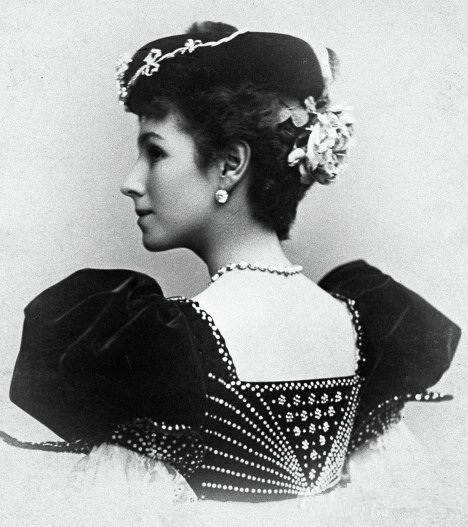
If you (like me) love looking at old pictures and artifacts, you will drool over the massive online Romanov-related exhibits on (and linked from) this site. The awesome thing about reading a history book about famous people who lived after the dawn of photography is that you aren't shackled to the few pictures in the center of the book since Google Image Search can show you a picture of any minor historical character in which you might be interested. How about Mathilde Kschessinska, the famous ballerina that had a long affair with the young Tsar, or Natalie Cheremetevskaya, the twice-divorced commoner that married the Tsar's younger brother, almost lost him his royal appointment and very nearly became empress after the abdication of Nicholas. No problem. I love that...

Now for a few facts that I can't help but share:
  • The reign of Nicholas and Alexandra got off to a bad start when a celebration in Khodynka Meadow the day after the coronation turned into a blood bath after rumors that there wouldn't be enough free beer for everyone gathered turned into a mad rush for the beer carts. Hundreds were killed and thousands injured.
  • The Tsar had a private librarian whose job was to select twenty of the best books from around the world each month (since the Tsar spoke and read many languages), which the Tsar would then carefully arrange in order of preference.
  • Although he spoke Russian to everyone else, Nicholas always spoke and wrote to his wife in English. Alexandra was a German Princess, but she was also the grand-daughter of Queen Victoria and spent much of her youth in England. Thus her English was always stronger than her Russian.
  • When Alexandra finally gave birth to a son (and Heir) after having four girls, the country was ecstatic. At his baptism, he was carried to the alter by an elderly woman who had carried young royals to their baptism for years. Since everyone was worried that the old woman might drop the Tsarevich, a special golden support harness was fastened to her shoulders and around the basinette.
  • The house in which the royal family was executed housed the archives of the local Communist party in the 1950s. Massie notes that the basement room in which the killing took place was "now occupied by dusty bins filled with old documents."
So, while this was a fun-to-read and interesting history of the last Tsar and the fall of Russia, I feel like I'll need to read a few more books in order to get a more balanced look at the whole thing. Still (as you can see from this really long post), I liked the book a lot and would recommend it to anyone with an interest in this intriguing royal family.

Monday, February 04, 2008

Ain't it satisfactory?

It is entirely possible that I have spent too much time over the past week looking at old missionary magazines and Christian newspapers for early-20th-century youth. But who could resist these jokes? Note that 80% of the humor comes from funny dialects and 20% comes from horrible puns. Spacebeer Industries is not responsible for offending any Scotsmen or Christian Scientists. Headlines and jokes transcribed in all their glory:

[From Onward, a weekly illustrated paper for young people.]

(from 1911)

Mummies the Word
"What's in here?" asked the tourist.

"Remains to be seen," responded the guide, as he led the way into the mummy-room.

A Countermand

A man is said to have written to a certain mail order house, on a postal card, as follows:

Dere Surs – I see yore advertisement. I wisht you would send me as soon as possebul yore caterlog of Elecktrical Goods, and Oblige. / Yours Truly, _______ / P. S. Never mine – you needen send it. I have changed my mine.

Crazy Ticket Agent
Clancy – Oi'm after a ticket ter Chicago.

Ticket Agent – Do you want an excursion Ticket? One that will take you there and back?

Clancy – What's the since of me payin' ter go there an' back when I'm here alriddy?

Keeping Tab on the Dentist
A Scotchman at the dentist's was told that he must take gas. While the dentist was getting it ready the Scot began to count his money.

The dentist said, somewhat testily, "You need not pay until the tooth is out."

"I ken that," said the Scotchman, "but as y're aboot to mak me sleep I jist want to see hoo I stand."

And No Longer
The long young person had just submitted his manuscript to the editor.

"Do you think I can get by with it?" he asked.

"Yes," said the editor after a long pause. "It's all right, as long as it is against the law to hit a man with a baseball bat.

(from 1913)

Couldn't Fool Fido
"Mamma, I just now fell down stairs and hit every stop all the way down!" exclaimed little Mary, who attends the Christian Science Sunday-school.

"Did you hurt yourself, dear?"

"No, mamma; I kept saying, 'Truth, truth, truth!' every step I hit, and I didn't hurt myself a bit. But I had Fido in my arms when I fell, and I think he is pretty badly hurt."

"What makes you think so, dear?"

"Why, every step we hit he yelled, 'Error, error, error!'"

He "Did" Them
"Did you hear about the defacement of Skinner's Tombstone?"

"No; what was it?"

"Someone added the word 'friends' to the epitaph."

"What was the epitaph?"

"'He did his best.'"

Goods back, Money refunded
Guide (before statue in museum) – "This piece of work that you are now looking at goes back to Praxiteles."

Visitor – "What's the matter? Ain't it satisfactory?

Sunday, February 03, 2008

Field trip!

Dr. M and I took a little field trip to Kyle, Texas this weekend as research for a writing project about Katherine Anne Porter that he is doing for school. On the list of things to see was the house Porter grew up in (now the Katherine Anne Porter Literary Center), and three of the town's cemeteries, one of which contains the remains of Porter's paternal grandparents who helped raise Porter in Kyle after the death of her mother.

Although we were mostly respectful amongst the dead of Kyle, and tried really hard not to walk on any graves or trip over any headstones, we did occasionally turn into junior high kids and break into giggles over hilarious names. Like this one. And this one. Who are buried right next to each other. In this family plot. It's like they buried them that way as part of an elaborate joke...

We also ate very tasty sandwiches at a little cafe on Center street. I had chicken salad. Plus they graciously stayed open a little late so we could eat our sandwiches there instead of out in our car.

See all the wondrous photos from our trip here.

Thursday, January 31, 2008

"Directly abreast with the times."

[click to enlarge]

From the Boy Crusader’s Pledge (1914):

Young Man, Keep Clean Inside
The man or boy who pollutes society with unclean speech or vulgar story should be branded as a criminal, for criminal that thing is. The filthy suggestiveness of an improper story will soak into the memory as spilled ink soaks into blotting paper. Allow no man to drag your mind through a sewer. Keep your mind sullied. It is of more importance to keep the dirt off the soul than to keep it off the clothes.

See more exciting ads from the backs of early 20th century missionary magazines here!

Wednesday, January 30, 2008

Mmmmmm

This just in: Dr. M makes an awesome spicy shrimp salad. Don't you wish he was your husband?

Saturday, January 26, 2008

Quarantine

I just finished reading Quarantine by Jim Crace (1997) as part of the infamous Smarter Than You Bookclub. This book takes place 2000 years ago or so in a little land called Judea. Five pilgrims have come out into the desert for 40 days of fasting: Marta, a barren wife hoping to give birth to a child; Aphas, an old man hoping to have his cancer cured; Shim, a proud scholar hoping to prove his connection to god; Badu, a deaf-mute guy that we really don't learn much about (except that he is a good hunter); and a young man from Galilee that you might have heard of -- Jesus. These pilgrims stumble onto the temporary camp of Musa, a traveling merchant, and his pregnant wife, Miri. Musa has a horrible fever and the two have been abandoned by their caravan.

After an off-hand, and rather accidental, curing of his fever by Jesus, Musa sees an opportunity to make some money from the pilgrims by charging them rent and selling them food and water when they break their fast at dusk. Miri is not that happy about Musa being cured, since he is a major jerk and she thought she was finally free of him. All the pilgrims fast together except for Jesus, who finds his way into an inaccessible cave where he refuses to speak to the other pilgrims, heal anyone else, or accept any of the food.

The conflicts between the pilgrims and the merchant, and their differing personalities, make for a very engaging and fast-paced story. You might have some idea of how things turn out with Jesus, although the way in which his fast concludes is a little more interesting than you might expect.

The basis for Crace's novel comes from a brief discussion of the temptation of Christ in the desert during his 40 day fast (mentioned in Matthew, Mark, and Luke). I'm not religious at all, and certainly no biblical scholar, but I like what Crace did with the story of Jesus and his fast. I think a theologian would have a lot of fun with this novel, and that people with a casual (or even anti-) interest in Jesus would enjoy it as well. Our fictional Jesus is more human than divine -- alternatively doubtful and proud, both sympathetic and off-putting, and a skinny daydreamer who has to pee a lot but holds it in sometimes as a sacrifice to god. I probably have more to say, but I'll save it for the bookclub.

[Do any of you STYBCers want to borrow my copy?]

Thursday, January 24, 2008

Nerd Alert

Right now it is 43 degrees Fahrenheit outside with 43% humidity, and this makes me super happy. Even more happy than when I look at the clock right at 11:11.

Wednesday, January 23, 2008

StuPd

Along the same lines of the buzzings pet peeve: why would a financial institution with a nice, solid name like Washington Mutual decide to change its name to the dumb sounding WaMu? I can't even say WaMu without sounding like an asshole. Is that what Washington Mutual wants from us? Do they think we can't remember two words so instead they'll just give us two syllables?

Luckily I bank at the totally solid credit union, so I don't have to worry about abbreviations -- just nice friendly acronyms like UFCU.

Monday, January 21, 2008

Kitchen Confidential or a Big Welcome to Secret Boyfriend #51

Oh Anthony Bourdain, you are such a sexy bad-boy chef. You deserve your place on the mantel of Secret Boyfriendom, even though my weekly excursion to SB-land has stopped. Welcome to the club...

And thanks to two awesome dudes, Dr. M and I received a copy of the book that brought you to the public eye, your memoir and insider's look at the professional kitchen -- Kitchen Confidential: Adventures in the Culinary Underbelly (2000).

This book is as sexy and fun to read as the adventurous and charismatic Bourdain is to watch. He takes us on a tour of his career, from his first job washing dishes in Cape Cod and his stint at the Culinary Institute of America, to a never-ending series of rises and falls through a variety of high and low-end chef jobs -- nameless restaurants that failed, and named restaurants that went on to succeed without him. Along the way, we get a look at what it is that a professional chef does with his day: how orders are procured, how the line works, how staff is handled, and how specials are thought up. Most of all, we share Bourdain's infectious love of good food, dismissal of pretentiousness, and the difficult but rewarding life of a professional chef.

In the end, we merge with Bourdain as the executive chef of Brasserie Les Halles in New York, and then send him off to his impending career as celebrity food raconteur and TV personality. And of course, his greatest honor of all: a place on the Spacebeer Secret Boyfriend Hall of fame.

Thursday, January 17, 2008

On Flocking to a Fire, circa 1928

Some helpful advice from the front page of the Bryan Daily Eagle, August 28, 1928:

The People’s Column

Attention of our people has been called to the ordinance which forbids automobiles from rushing to fires when the alarm is sounded and to park in the proximity of the blaze. This may seem like a needless restriction at first glance, but it is of utmost importance. In many instances the sparks will fly around and might take such a turn that the presence of spectators would hamper the fire boys in extinguishing the flames. Flocking to a fire is really a “Hick-town” custom that has about passed out with the advent of the radio and other new discoveries. If spectators could do any good at the fires the humanitarian appeal would be strong, but in reality they only hinder and never help. Let’s observe this law.


And an unrelated headline, also on the front page: “Murder Orgy is Blamed to Insane Man”

Sadly the accompanying story was not nearly as intriguing as the headline...

Tuesday, January 15, 2008

Masters of the Vortex

Aw shit, I finished the Lensman series last year! But what if I still want to read about the Lensman universe? What's a girl to do?

Why she just picks up a handy copy of E. E. "Doc" Smith's Masters of the Vortex, another action-packed tale set in the universe of the Lens, but without Kim Kinnison and our other favorites from the series (thanks, once again, to the lovely Choo for the book loan). The stories were originally published in the early 40s, and the hardcover came out in 1960 (a pretty detailed description of the publication process can be found here if you're interested).

In Masters of the Vortex our hero (Neal "Storm" Cloud) actually isn't a Lensman, instead he is a nuclear engineer with an amazingly mathematical mind. Cloud's family is tragically killed in a freak accident by a "flying vortex of atomic destruction" -- one of many vortices that have been a side-effect of the wide-spread use of nuclear energy and are terrorizing planets around the universe. Devastated by the loss of his family, Cloud takes a leave of absence from the Galactic Patrol, only to be struck with an idea for "blowing out" a vortex and stopping its path of destruction. It is rather technical (and Smith is soooo good at writing the technical stuff in a fun way), but the general idea is that Cloud's brain works so fast that he can calculate exactly where the center of the vortex will be at a moment in time and then hit it with a bomb that is set at the exact strength to dissipate the charge and save the world.

As you might expect, this works, and it makes Cloud a very popular guy.

Cloud's new job as the universe's one and only vortex blaster takes him from planet to planet where he and his (totally awesome) crew (of aliens) battle wits against drug dealers and freaky life forms, and where his heart eventually begins to heal and his eyes turn toward his sexy, super smart, and self-taught psychic co-worker.

This book is a very fun read and stands alone from the other Lens books (so no need to read them first if you haven't already).

[And rock out with the back cover here -- Runaway Vortex!!]

Monday, January 14, 2008

Skitter, scratch, and squeak

Dear Mice,

I don't really like you in the kitchen -- in fact, you make me irritated and germ-conscious when I hear you under the fridge. What I like even less, however, is your nightly dance parties in the ceiling right above my head while I'm trying to sleep. 11 pm - 5 am might seem like a good time for running back and forth and making never-ending scratching sounds to you, but it is actually my prime sleeping window. I sincerely hope that you are trying to come up from our upstairs neighbors floor and not down through our ceiling so you can fall onto my bed, but at 3 am, when I've been up for hours, all I can think of is a mouse invasion in the bedroom. This means that, even if I do manage to slip into sleep for a bit, my dreams will not be so good. So please, for the sake of my sanity, have your party somewhere else. I'm sure our neighbors won't mind.

Best,

SB

Saturday, January 12, 2008

I wish I had a Tik-Tok...

I know I sort of posted about this before, but I just watched Return to Oz (d. Walter Murch, 1985) for the first time since I was a kid and I'm all giddy about it.

Every one of the millions of people who love the Wizard of Oz should see this movie. It didn't do well when it was released because most people were expecting it to be a straight sequel to the Judy Garland movie. Instead, Murch gives us a film that is much darker, closer to the original books, and much more like one of the original Grimm's fairy tales than the beautiful story book of the earlier film. The special effects hold up wonderfully -- all puppets and animatronics, some done by Jim Henson's son Brian. They have a warmth and character to them that can't be replicated by CGI. I don't think I'm just being nostalgic here...

One of the best characters in the film is Tik-Tok, the mechanical man who talks with his moustache, has to be wound up constantly, and defends Dorothy with every ounce of his mechanical mind and body. He is simultaneously hilarious, brave, and really sweet. I really do wish I had a Tik-Tok of my own.

One of the reasons I liked this movie so much as a child, and why I think it is still a great film for children today is that Dorothy gets into truly dangerous and scary situations, and through her own power and the support of her goofy group of followers, she solves problems and rescues herself. Plus it is fun to get freaked out when you are a kid. Actually, it is still fun to get freaked out as an adult...

Little Kristy thought this was one of the freakiest scenes in the movie (excepting, of course, those super-freaky Wheelers):


Seriously, rent this at your next opportunity. And buy it for all the young boys and girls in your life. You won't be disappointed.

[If you are interested in seeing how all the puppets and robots work, check out this twenty minute behind the scenes documentary made on the set -- the dude who had to fold himself in half to play Tik-Tok must have had some major dedication...]

Thursday, January 10, 2008

Middlesex

Thanks to the lovely Joolie, I wrapped myself around Middlesex (2002) by Jeffrey Eugenides over my holiday break. Seeing as it is a Pulitzer prize winning novel, it really isn't any surprise that it was very good. And, if you are like me, you might think of not reading it since Oprah made it a bookclub choice. But resist those thoughts! Join the masses! Because Middlesex is really quite a nice read.

The book follows the story of Cal, who is an intersex man who grew up as a girl, Calliope. We find this out at the beginning of the novel, but (in a very Tristram Shandy-like way), we then go waaaaay back to Cal's ancestral village on the slopes of Mount Olympus where his grandmother and grandfather are dealing with the death of their parents, coming of age, and getting forced out of their village by invading Turks. The novel traces the story of the hermaphroditic gene that has affected the village for years -- one in which a baby that looks outwardly like a girl begins to manifest male characteristics when she hits puberty. And due to the breaking of a taboo, a dose of chance, and the general mystery of genetics (and through nearly half the book), we follow the grandparents to America, and follow their genes into Calliope.

I liked the family-history part of the story -- Eugenides gives Cal a fun omniscience that gives the narration a unique perspective. But where the book really gets going is when Calliope hits puberty. The particularly involving part (for me at least) is how much I related to her feelings during this universally awkward time. I know I felt gigantic and gawky and weird and out of control when I was 14, just like Calliope. And every adolescent feels isolated and like the things that are happening to them couldn't possibly be happening to anyone else. Of course, in Calliope's case, she is right -- most of the other girls at her private school were going through puberty, but none of them were starting to display male sexual characteristics.

The book even has a very satisfying, if bittersweet, ending. So, Middlesex = yay! Go check it out.

[And finally, doesn't Eugenides have the greatest author picture? The author picture is one of my favorite photo genres, and he does it up perfectly. ]

Tuesday, January 08, 2008

Robocam

Meet Robocam, my new best computer friend. My sister had the inspired idea of getting everyone in my family matching robot-shaped webcams for Christmas. The lens is in his little tummy, the microphone is on his little forehead, and his little eyes light up (in actually a kind of freaky way) to brighten your face. Plus he is shaped like a robot with poseable arms and legs. Even if I never used him as a webcam, he is a pretty nice addition to the computer ensemble. So far the only person I've video-conferenced with is my dad, and we spent most of the time just laughing and waving our hands in front of the camera. It was fun for a novelty call, though, and also fun to see my dad's face, my mom popping in, and a portion of the living room.

Overall using my robocam makes me feel like I'm living in the future -- because isn't the future all jetpacks and video phones?

Sunday, January 06, 2008

The Story of Forgetting

I recently received an advanced reader's copy of The Story of Forgetting the debut novel by Stefan Merrill Block (2008) through the LibraryThing Early Reviewers program (which I love love love).

The Story of Forgetting is an engaging and complex story that revolves around a familial genetic curse of early-onset Alzheimer's that goes undetected until the affected person is in their late-30s. When it strikes, they start forgetting the things closest to them in time and begin living their lives in reverse until, at the end, they forget to breathe, their heart forgets to beat, and they die.

The story comes together through different tracks: Abel, a 70 year old man living near Dallas in his childhood home and gradually being surrounded by suburban houses as he sells away the family farmland; and Seth, a 15 year old living in the suburbs of Austin whose mother, Jaime, is beginning to forget. Jaime never told her husband or son anything about her childhood -- she wouldn't even tell Seth her maiden name -- so when Seth finds out that the disease is genetic, he begins a quest to trace his mother's history as a way of understanding his own potential future.

Laced through these two storylines are the tales of Isidora, a family mythology about a hidden land where no one remembers anything and everyone is content in the moment. These stories are passed from generation to generation, and are one of the only hints that Jaime gives Seth about her past. The book also takes us through a scientific history of the disease, going back to the first mutated chromosome on an English Duke in the 1800s. We watch as his affairs with local women multiply (he is very discrete, since he can't remember anything) and his illegitimate children continue the legacy of the disease.

I really enjoyed this book -- the subject matter is unusual and interesting, the characters are well written, and the pacing is excellent. It almost lets me forgive Block for only being born in 1982. And since he is from Plano and the book takes place in the Austin area, Austin readers can marvel at familiar landmarks (Round Rock! MoPac! UT!). You can read more about Block and his novel at his website. And thanks to the power of Google and his unusual name, you can also read about his 1999 citation in the Intel Science Search for his research in field of deception and non-verbal expression of emotion.

[image above is a drawing of Alzheimer neuritic plaques that I found here.]

Saturday, January 05, 2008

Holiday Recap

We have safely returned from our annual trek to Nebraska, where we didn't see the ground once in two and a half weeks since it was constantly covered with snow, snow, ice, and more snow. Come and relive the experience with me by browsing through the 327 pictures we took on the trip, chronologically arranged for your viewing pleasure.

Highlights include: cats (including hairless cats), dogs, snow, babies, uno, RockBand, a siblings new year's eve featuring Singstar, dance parties, sunglasses, and a return of the beeritar.

Monday, December 24, 2007

Climates

I am getting a little tired of all this snow.

Sunday, December 16, 2007

And one other thing...

We will be experiencing exciting holiday-times, northern climates, family fun, and friend blasts for the next couple of weeks, so Spacebeerian updates will be few and far between.

Pellucidar (1915)

Thanks to the book- hunting and lending skills of the lovely choo, I helped myself to a big helping of Pellucidar (1915) by Edgar Rice Burroughs. As you might know, Burroughs also wrote the Tarzan novels (which I love -- and I also super love the movies, of which there are about 500), and the John Carter/Mars/Barsoom novels, of which I've only read one, but I liked it quite a bit.

Pellucidar is actually the second in Burrough's hollow earth series that started with At the Earth's Core. I haven't read the first book in the series, but like many adventure novels, the action is pretty self-contained and references to happenings in the first book are explained.

Our hero, David Innes, invented a mining drill back in the first book, but when he drove it into the earth with his partner Perry, they quickly lost control of the drill and feared for their lives as they headed to the center of the earth. Boy were they surprised when, instead of encountering molten lava, they found an undiscovered world. There is a pretty complete description of Pellucidar's geography and inhabitants on Wikipedia, but the highlights are: There is no horizon since the land curves up to follow the interior curve of the earth; the sun hangs in the center of the sky and never moves, so there is no sense of time and there is never night; there is a moon that hangs in the sky, just one mile over the "Land of the Awful Shadow" which can never escape from the darkness of the stationary moon; the people are at a stone age level of development, and most live in caves; and freaky intelligent giant flying lizards terrorize the small and unorganized groups of humans and make them their slaves using the brute strength of a third race of semi-intelligent apes.

In the first book it seems that David and Perry began to organize the humans and fight the lizards, and David also marries one of the super lovely caveladies (Dian the Beautiful). But when David takes the mining machine back to the surface to get some 20th century materials to help in their revolution, a bad human kidnaps Dian and the alliance falls apart.

Pellucidar begins with David's return to the earth's core and follows him as he rescues his woman, fights the evil lizards, reunites the cave people, and teaches everyone about building boats, firing cannons, reading, and not enslaving captured prisoners.

The book is a fun read, as all Burroughs is, and the geography and people of Pellucidar allow for some pretty creative adventures. There are occasional slips into early 20th century racism, but only slightly cringeworthy and nothing too blatant. I would gladly return to the world of Pellucidar -- and I am particularly excited to see what happens when Tarzan goes there...

[Check out the back cover here. And if you are so inclined, just read the whole darn thing here.]

Friday, December 14, 2007

Frozen in time

It wouldn't be the holiday season without another creepy ad from Cuisinart (click on the picture to see it in all its freaky glory). This time everyone is staring at grandma! Except for the couple sitting across the table from each other, who are gazing lovingly into each others eyes with strange grins. Maybe they hate grandma?

Thursday, December 13, 2007

Update

My hair looked really awesome for about an hour today, but since I work alone in a basement and didn't have any meetings, no one saw it but me. Now it looks a little bit weird again. Thought you'd like to know.

Love,

Spacebeer

Monday, December 10, 2007

Wrip Wrap Wrippidy Doo

I am admittedly not all that crafty, but I had a lovely time at a holiday-type craft night this weekend, where I made the watercolor masterpiece you see above. I think I'm going to wrap something in it. Just wait and see if you get to be the lucky recipient!

Saturday, December 08, 2007

Certain Things Last

Sherwood Anderson (pictured here) is best known for his 1919 publication, Winesburg, Ohio -- I haven't read that yet, but I did just finish my first excursion into the world of Anderson with Certain Things Last: The Selected Stories of Sherwood Anderson (1992, ed. Charles E. Modlin). Wow.

The stories in this collection were all written after Winesburg, Ohio, from 1920 until the year of Anderson's death in 1941 (he died of peritonitis in Panama at the age of 64 after swallowing a piece of a toothpick embedded in a martini olive, which is actually a pretty unique way to go). But Anderson's writing style is so compelling and modern, that you forget that the stories are taking place in the early part of the twentieth century until someone rides up in a horse and buggy or gets called off to fight in the war.

These stories explore complicated conflicts of modern life -- rural life vs. urban life (both resulting in isolation broken up by moments of connection), single life vs. married life (both filled with desire for what you do not have -- a desire Anderson apparently felt personally since he married four times), and art vs. labor (never feeling like you are doing what you want, or able to do what you want as well as you want to). Even though the stories are generally dark, there is a humor to Anderson's observations that keep the characters from getting bogged down in their emotions and desires.

I loved this book.

Thursday, December 06, 2007

The Three P's

Painting. Partying. Pebbernodder.

I'd love to chat, but they are keeping me busy.

[Okay, I'm not actually partying, but I needed another P.]

Tuesday, December 04, 2007

Birthbot


Hey, guess what? I accidentally turned 31 last week! To celebrate I ate fried chicken, talked about As I Lay Dying, drank bourbon, took two days off of work, got the oil changed in both of our cars, bought a pair of shoes, had people over, and made the cranberry upside-down muffins pictured above. Not necessarily in that order. Revel in photos from the gathering, all taken in a five minute period after I told a drunken Dr. M to take some pictures. Pretend you are there!

Monday, December 03, 2007

The Whole Shootin' Match

If you live in Austin, you should make your way down to the Alamo Ritz this week to see The Whole Shootin' Match (d. Eagle Pennell, 1979). It is really just a great movie all around -- funny, touching without being sentimental, nicely acted, entertaining -- and on top of all of that, you get some nice footage of Austin in the late 1970s. Pennell also directed Last Night at the Alamo, which is also excellent and available on VHS, so if you can't get to the Ritz this week, at least put that one on your list of things to rent.

Do it!

Saturday, December 01, 2007

Fantods

Word of the Day: Fantod

As in "the potential mouse under (in?) our fridge is giving us the fantods."

This word comes up numerous times in the book of Sherwood Anderson stories I'm reading right now, and is also the name of Edward Gorey's personal publishing company, The Fantod Press.

Thursday, November 29, 2007

Everybody's Doin' It Now


"Everybody's Doin' it" by Commander Cody and His Lost Planet Airmen, has hit the top of the charts in the Spacebeer/Dr. Mystery household. It is featured prominently in Joe Dante's first film, Hollywood Boulevard (made for Roger Corman), which he co-directed in 1976 with Allan Arkush, the guy that made Rock and Roll High School. I will argue that it is possibly the best non-sequitur musical interlude / love scene committed to film. Just listen to a few times and see if you can stop singing it.

Tuesday, November 27, 2007

But not as brightly lit...

This week Josh and I finished a year-long project of watching every single last episode of Tales from the Darkside. A project well worth the effort I might add. I love comeuppance as a plot device, and 91% of Tales from the Darkside episodes feature comeuppance prominently.

It is impossible for me to pick a favorite, so enjoy the intro (which makes me happy and excited the same way that the intro to Twin Peaks does), and then watch a bunch of YouTube clips here.

Monday, November 26, 2007

Children of the Lens

The last official book of the Lensman series (again, nicely lent by the lovely choo) is Children of the Lens (serialized in 1947/48, published in hardcover in 1954). In this book, the long work of the Arisian master race is finally realized with the off-spring of Kim and Clarissa Kinnison. Their son, Kit, and two sets of twin daughters (who of course all have red hair), are the world's only third-stage lensman, and with their combined powers have minds even stronger than those of their mentors.

As the novel opens, the fight between good and evil has really heated up the universe, and only the combined strength of the first, second, and third stage lensmen can save it, mostly through a series of interconnecting adventures. In one such quest, Kim Kinnison takes on the persona of Sybly Whyte, a hacky (but popular) author of space-opera novels and schlocky journalism. The section Smith gives us of one of Whyte's books is some of the best science-fiction satire ever:

Qadgop the Mercotan slithered flatly around the after-bulge of the tranship. One claw dug into the meters-thick armor of pure neutronium, then another. Its terrible xmex-like snout locked on. Its zymolosely polydactile tongue crunched out, crashed down, rasped across. Slurp! Slurp! At each abrasive stroke the groove in the tranship's plating deepened and Qadgop leered more fiercely. Fools! Did they think that the airlessness of absolute space, the heatlessness of absolute zero, the yieldlessness of absolute neutronium, could stop QADGOP THE MERCOTAN? And the stowaway, that human wench Cynthia, cowering in helpless terror just beyond this thin and fragile wall...

Children of the Lens is a little more disjointed than its predecessors, mostly because we are following the adventures and quests of five children, two parents, and three other second-stage lensmen, instead of focusing most of our attention on Kim Kinnison and his work. Spreading the adventure out among a larger cast of characters does nothing to lessen the excitement, however. Children of the Lens provides a satisfying and fun to read conclusion to the Lensman saga.

And there is still Masters of the Vortex, a seventh novel by Smith that takes place in the Lensman universe, but isn't part of the story arc explored in these first six books. And of course I'm going to read it.

Go Lensmen!

[Oooh, and you have to check out this fold-out ad for a science fiction bookclub that was tipped in to the middle of the book. My favorite part is the fold-together envelope that you use to send in your dime for your trial membership.]

Wednesday, November 21, 2007

Glinda of Oz

I'm done! Last week I finished reading every word of this book, finishing it all off with the last of the Oz books written by L. Frank Baum (and the second published posthumously), Glinda of Oz; In Which Are Related the Exciting Experiences of Princess Ozma of Oz, and Dorothy, in Their Hazardous Journey to the Home of the Flatheads, and to the Magic Isle of the Skeezers, and How They Were Rescued from Dire Peril by the sorcery of Glinda the Good (1920). Or just Glinda of Oz for short.

This is one of the strongest of the late-period Oz books, and makes for a rather nice adventure story and a satisfying (if unplanned) end to the series.

In this book, Ozma and Dorothy learn of two groups far off in the unexplored regions of Oz, the Flatheads and the Skeezers, who are preparing to go to war against one another. The Flatheads live on a mountain and have, well, flat heads. Because their heads are flat, they have no room for a brain, and were instead each given one brain in a jar that they carry around with them. This set-up makes it possible for the king (named Su-Dic, which is short for supreme dictator) and queen to confiscate other Flathead's brains and make themselves the smartest of their race so they can never lose power. The Skeezers live in the middle of a lake in a beautiful glass dome. They are ruled by a vain queen named Coo-ee-oh. Both groups have 101 citizens and are mad at each other for a wide variety of reasons, mostly involving the vanities of their leaders and the misuse of magic.

The Flatheads and the Skeezers are so isolated that they don't even know they are part of Oz, and have never heard of Ozma or her rules against using magic in the kingdom. Because it is Ozma's job to keep peace in Oz, she and Dorothy decide to travel to this corner of Oz and negotiate peace between the two groups and introduce them to the wonderfulness of Ozma's leadership.

Glinda is initially unsure about this, since it would be terrible for all the people in Oz if Ozma or Dorothy were hurt. Since Ozma is a fairy, she is relatively safe, but Dorothy is a different story:

The very fact that Dorothy lived in Oz, and had been made a Princess by her friend Ozma, prevented her from being killed or suffering any great bodily pain as long as she lived in that fairyland. She could not grow big, either, and would always remain the same little girl who had come to Oz, unless in some way she left that fairyland or was spirited away from it. But Dorothy was a mortal, nevertheless, and might possibly be destroyed, or hidden where none of her friends could ever find her. She could, for instance be cut into pieces, and the pieces, while still alive and free from pain, could be widely scattered; or she might be buried deep underground or "destroyed" in other ways by evil magicians, were she not properly protected. These facts Glinda was considering while she paced with stately tread her marble hall.

As you might expect, the two girls get in a bit over their heads when trying to work things out between the Flatheads and the Skeezers, but after quite a few adventures, and with a little help from their friends and the magic of Glinda and the Wizard of Oz, peace is eventually restored to the kingdom.

[Oooh, and you can view some images of the original manuscript here, thanks to the Library of Congress. Yay archives!]

[Read the whole thing here! It is good!]

Tuesday, November 20, 2007

What is gross:

Waking up in the morning and going into the bathroom to pee, but when you lift up the lid of the toilet a roach runs out from under the seat and darts into the little crevice under the tank. You can't see the roach or get it to run out so you can kill it, but you have to pee really bad. I just had to pray that the roach was as scared of my butt as I was scared of it. Not very relaxing.

Then there was a silverfish in the shower.

I swear my house is very clean (I actually just cleaned the bathroom on Monday, and last night I vacuumed my couch for heaven's sake), but we appear to be having an infestation of one of each kind of gross critter. What's next, a snake? Giant spiders? I can hardly wait...

Monday, November 19, 2007

Mouse House

Dr. M and I had to share our house with a freaky mouse for a few days -- apparently under our stove is a great place to live if you are very small and like to eat crumbs. Unfortunately, if you live in and/or under a stove, all your freaky little scratchy sounds are instantly amplified and transmitted to human ears. And humans hate those freaky little scratchy sounds. Mouse was caught in a rather sad way on Sunday morning (glue trap - I know, it isn't very nice, and I'm trying not to think about it too much, but our landlords put them down and who am I to sneer at free traps. Plus I can understand that in an apartment building, you want to stop any mouse problems permanently). Today our lovely maintenance guy filled in all visible mouse entrances, and I tried putting out some cotton balls with peppermint oil on them for good measure.

A side benefit is that I had to compulsively clean the kitchen yesterday to get rid of real and imagined mouse germs, so our house is quite clean and also smells minty.

Saturday, November 17, 2007

The Uncommitted Man


The Uncommitted Man (1966) by R. E. Pickering, is apparently not a very popular book. Not that people who read it don't like it, but more that no one who read it has put anything about it on the wonderful world of the internet -- just a handful of used book dealers hawking copies. In fact, if you search for it, the number one hit is the scan of the cover that I put on Flickr a few days ago. And no one on LibraryThing has catalogued it except me. This is too bad, as The Uncommitted Man is really quite a nice little novel, and it has a very lovely cover (which is why I bought it).

The cover advertises it as "a different kind of suspense novel set deep in the cold spy country." The reason this story is different from most other spy stories is that our hero isn't a detective, a journalist, or a cop. He is a salesman who is going through some kind of existential crisis. Phillips is a perfectly ordinary Englishman. He came to Vienna as a soldier at the very end of World War II and unthinkingly went about his orders, just as he had unthinkingly done most everything else in his life.

The only interesting thing about him is his wife, a mysterious woman named Alec who lived through the war in Vienna and won't discuss her past. But she is smoking hot. (It's impossible not to picture Alec as Marlene Dietrich.) So they get married. They live in Vienna for a bit, then England, then finally Germany (even though Phillips hates Germans). Phillips has a series of jobs, but ends up being a middleman-salesman for various factories, something he doesn't care about but is quite successful at. He travels a lot and knows his wife sometimes leaves town while he is gone. They still get along because, even after ten years of marriage, "they never became sufficiently intimate to quarrel."

Then one day, Phillips comes home and Alec is gone. All her stuff is cleared out, and he has no idea where she went. He drops out of his life in Germany for a few weeks, doesn't leave the house, and feels the ennui of an unsatisfied salesman. Then he gets a telegram from a friend in Vienna who has seen Alec -- so Phillips sells the house, drops everything, and returns to Austria.

What follows is a nicely drawn combination of a straightforward spy story (gun runners! blackmail! international espionage! communists!); a philosophical and rather interior story of Phillips trying to figure out what he has done with his life and what he is going to do now; and a mystery about Alec and the story of her background.

It all moves very quickly, and climaxes when Phillips gets in over his head with all the spies and criminals and ends up stuck behind the Iron Curtain in Budapest without a passport and with the police on his trail.

I'd like to know more about Robert Easton Pickering -- from what I can tell online, he is British, and he wrote this in 1966, and then a book called Word Game in 1982 (which they have at PCL -- I might have to get Dr. M to check it out for me...). Further search into the depths of OCLC notes that he also published a book called In Transit in 1968, although that might have been a reissue of The Uncommitted Man with a new title (it was also called Himself Again in its British version). My guess is that Pickering might be a pseudonym from another author, but I don't have much to base that guess on...

[Back cover available here.]

Thursday, November 15, 2007

On the back

Please amuse yourselves with these out-of-context comic panels I found on the back of a newspaper clipping at work (ca. 1950s, I believe). And revel in the horror of the freaky faces on the one pictured above. I don't know if the man's bizarre browline or the woman's death eyes are worse...

Monday, November 12, 2007

Art vs. Life

Am I the only one who has noticed that the much discussed story of the guy who made a website to track down a girl he spotted on the subway bears an uncanny resemblance to the plot of 'N Sync's 2001 floppola movie On the Line (just replace websites with billboards since we apparently didn't have the internet in 2001)? Let me note for the record that I only know this because the CW played On the Line as their Sunday afternoon movie a couple of months ago, and I was briefly intrigued.

The casting of On the Line is particularly hilarious as Lance Bass (who later came out as a gay man) plays the romantic lead, but Justin Timberlake (who later Brought Sexy Back) has a very minor role as a gay hairdresser.

[And just to tie it all together, here is a fanfiction video made of stills from Harry Potter movies that brings the plot of the 'N Sync movie to Hogwarts (with help from Ashley Tisdale, who I never heard of, but who is apparently in High School Musical).]

Saturday, November 10, 2007

Colonial Travelers in Latin America

I bought my copy of Colonial Travelers in Latin America, edited by Irving A. Leonard (1972) when I was in college. And thanks to the wonders of my random book reading system, I have finally gotten around to reading it. I have to admit, it does look a little boring on the outside, which is probably why I hadn't read it up until now.

At the time that I bought it, I was fascinated with the conquest of the Americas by the Spanish, particularly the stupendous memoir by Cabeza de Vaca about his doomed expedition to Florida in 1528 and his journey through the present-day Southeastern US and Mexico before making his way back to Europe nearly ten years later (the book was also made into a movie, which isn't bad). It really is a great narrative, and I read it multiple times in college and wrote several papers on mister cow head.

So, at the time I was all excited about more contemporary writings about colonial Latin America. And this book, although I didn't read it until nearly ten years after I bought it, does the trick. Leonard compiles readings from the sixteenth, seventeenth, and eighteenth century, written by men of different nationalities traveling through the Spanish and Portuguese colonies for different reasons (including religion, commerce, and science). The translations are very readable and intriguing, and the selections add color and context to the writings of more well-known colonial writers like Bartolome de las Casas or Cabeza de Vaca. Rather than being overly political or religious in their observations, the writers in this collection give detailed descriptions of everyday life in the colonies over three centuries. We get notes on clothing, food (one writer is very impressed with potatoes, after having them for the first time), the social relationships, the women, the natives, the slaves, the modes of travel, and the personalities of the different peoples.

If you have any interest in this period of history in the Americas, then you won't go wrong by checking out Leonard's anthology.

Friday, November 09, 2007

Drink it

The new pomegranate/blueberry juice from Minute Maid is really great. You should drink some! Now enjoy a press release about the juice from a site that features "Global Fresh Produce and Banana News."

That is all.

Tuesday, November 06, 2007

Virtuous

I went to the dentist and voted today, and yesterday I got the oil changed in Dr. M's car, so right now I am feeling exceedingly righteous. Feel free to bask in my glory.

Monday, November 05, 2007

Second Stage Lensmen

I love the lensman books. Love love love them. And I extra- special loved Second Stage Lensmen (1953), the fifth book in the series.

This book starts one second after the last book leaves off, with our hero Kim Kinnison and his lovely lady-friend, the brave and smart and beautiful Clarissa MacDougal basking in the glow of finally deciding to get married. Since Kim just saved the universe, it shouldn't be a problem, right?

Wrong.

Kim gets a mind-beam from his Mentor on Arisia telling him to think a little harder about his plan to get all the bad guys. It turns out they go much higher up than Kim had originally thought, and if he were to abandon his post and get married now, they would most certainly attack and destroy the earth.

So: Kim gets back to business. Clues first lead him to an Earth-like planet in an unexplored section of the universe. He gets ready to make a landing when he realizes that the entire planet is filled with women -- tall, beautiful, strong women, who don't wear any clothes, measure everything by its efficiency, have bred their men into a short animalistic subspecies that they use only for breeding, and have really bad haircuts:

But she wore no jewelry, no bracelets, no ribbons; no decoration of any sort of kind. No paint, no powder, no touch of perfume. Her heavy, bushy eyebrows had never been plucked or clipped. Some of her teeth had been expertly filled, and she had a two-tooth bridge that would have done credit to any Tellurian dentist -- but her hair! It, too, was painfully clean, as was the white scalp beneath it, but aesthetically it was a mess. Some of it reached almost to her shoulders, but it was very evident that whenever a lock grew long enough to be a bother, she was wont to grab it and hew it off, as close to the skull as possible with whatever knife, shears, or other implement came readiest to hand.

[This reminds me that I need a haircut.]

In order to obtain information about how this key planet fit into the schemes of the bad guys, Clarissa is made into the very first female Lensman. So at least the two of them can lens each other and have telepathic conversations across the depths of space, even if they can't get married....

All kinds of exciting things happen, and eventually Kim decides to go undercover and infiltrate the upper levels of the Boskonian bad-guy leadership. To do this he takes on the identity of a soldier that matches his body type. After some painstaking work to change the archival record (which is later tested for forgery by the head of the bad guys), plus some magic mind work on anyone who ever knew the ex-soldier, Kim takes his place, rises through the ranks, and does just about as well as you might expect the hero of a space opera to do.

Sunday, November 04, 2007

Dear Extra Hour

You are great.

love,

Spacebeer

Friday, November 02, 2007

Los Angeles

Los Angeles Plays Itself (2003, directed by Thom Andersen) is an amazing documentary on the history of Los Angeles, film making, architecture, popular culture, the director's life, what Los Angeles looks like in the movies, what it looks like when it is pretending to be someplace else, what it really looks like, and about a million other things. It is also really really really great. If you are in Austin on November 14th, you should go see it at the Ritz.

Thursday, November 01, 2007

Boo-ter

This turkey-shaped butter sculpture truly was the scariest thing I observed during the Halloween festivities this week (most of which went undocumented, but some of which are pictured here). In addition, I love my sister's costume this year, and I think I'm going to copy it one of these days. Now I need to hit that giant Halloween store in the hancock center to scoop up awesome deals for next year's festivities. Halloween -- it is the best holiday we have.

Wednesday, October 31, 2007

Scared yet?

Happy Halloween from me and my favorite decapitated zombie vampire.

Tuesday, October 30, 2007

MWYEGTDAT

In case you missed it, the sixth edition of Roast Beef's wonderful zine, Man Why You Even Got to do a Thing has been released, thanks to the wonders of the Achewood universe. If you want to know what grodles or kadonklin means, the result of Nice Pete reviewing a Chinese/Mexican restaurant called Mr. Wing's Taco, or what an imaginary date with Roast Beef might turn out like, then this is the zine for you. Buy it!

Monday, October 29, 2007

The Magic of Oz

The Magic of Oz: A Faithful Record of the Remarkable Adventures of Dorothy and Trot and the Wizard of Oz, Together with the Cowardly Lion, the Hungry Tiger, and Cap'n Bill, in Their Successful Search for a Magical and Beautiful Birthday Present for Princess Ozma of Oz (1919) (or just The Magic of Oz, for short), is the first of the two Oz books written by Baum that were published after his death.

In this book, as you might guess from the subtitle, all our favorite characters go off on a search for really cool things to get Ozma for her birthday. Ozma doesn't need anything, since she is an immortal magic fairy, but she does like to throw big parties, and everyone loves her so much that they like to find neat ways to help her celebrate.

The gang separates into two main groups: Dorothy, the Wizard, the Cowardly Lion and the Hungry Tiger go off to the forest to get a dozen monkeys that they plan to magically shrink and then train them to jump out of Ozma's birthday cake and do some neat tricks; Cap'n Bill, Trot, and the Glass Cat go to a weird island that the cat found once where a magic flower pot blooms, fades, and grows new flowers every few seconds.

Meanwhile, in another part of Oz, a Munchkin named Kiki Aru discovers the secret for transforming himself (and other living things) into anything at all (all you have to do is pronounce Pyrzqxgl correctly). He uses his newly found transformative powers to leave his boring village and go explore. He runs into the exiled Nome King, Ruggedo, who convinces him to transform them both so they can rally together all the beasts in Oz, conquer the Emerald City, and take revenge for the loss of his kingdom.

Cap'n Bill and Trot get near the weird island, but when Cap'n Bill starts making a raft, they run into a mean animal called the Kalidah (who has the head of a tiger and the body of a bear, and is rather gruesomely dealt with by the Cap'n):

Cap'n Bill was cutting from the trees some long stakes, making them sharp at one end and leaving a crotch at the other end. These were to bind the logs of his raft together. He had fashioned several and was just finishing another when the Glass Cat cried: "Look out! There's a Kalidah coming toward us."

Trot jumped up, greatly frightened, and looked at the terrible animal as if fascinated by its fierce eyes, for the Kalidah was looking at her, too, and its look wasn't at all friendly. But Cap'n Bill called to her: "Wade into the river, Trot, up to your knees--an' stay there!" and she obeyed him at once. The sailor-man hobbled forward, the stake in one hand and his axe in the other, and got between the girl and the beast, which sprang upon him with a growl of defiance.

Cap'n Bill moved pretty slowly, sometimes, but now he was quick as could be. As the Kalidah sprang toward him he stuck out his wooden leg and the point of it struck the beast between the eyes and sent it rolling upon the ground. Before it could get upon its feet again the sailor pushed the sharp stake right through its body and then with the flat side of the axe he hammered the stake as far into the ground as it would go. By this means he captured the great beast and made it harmless, for try as it would, it could not get away from the stake that held it.

Cap'n Bill knew he could not kill the Kalidah, for no living thing in Oz can be killed, so he stood back and watched the beast wriggle and growl and paw the earth with its sharp claws, and then, satisfied it could not escape, he told Trot to come out of the water again and dry her wet shoes and stockings in the sun.

"Are you sure he can't get away?" she asked.

"I'd bet a cookie on it," said Cap'n Bill, so Trot came ashore and took off her shoes and stockings and laid them on the log to dry, while the sailor-man resumed his work on the raft.


Sadly, when the two get to the island, they realize it is enchanted and their feet have grown roots and planted them in the ground. To make matters worse, they start shrinking, as their bodies are transformed into a root system. At least the flower is pretty, though...

In the meantime, the Kalidah, although pinned fast to the earth by Cap'n Bill's stake, was facing the island, and now the ugly expression which passed over its face when it defied and sneered at Cap'n Bill and Trot, had changed to one of amusement and curiosity. When it saw the adventurers had actually reached the island and were standing beside the Magic Flower, it heaved a breath of satisfaction--a long, deep breath that swelled its deep chest until the beast could feel the stake that held him move a little, as if withdrawing itself from the ground.

"Ah ha!" murmured the Kalidah, "a little more of this will set me free and allow me to escape!"

So he began breathing as hard as he could, puffing out his chest as much as possible with each indrawing breath, and by doing this he managed to raise the stake with each powerful breath, until at last the Kalidah--using the muscles of his four legs as well as his deep breaths--found itself free of the sandy soil. The stake was sticking right through him, however, so he found a rock deeply set in the bank and pressed the sharp point of the stake upon the surface of this rock until he had driven it clear through his body. Then, by getting the stake tangled among some thorny bushes, and wiggling his body, he managed to draw it out altogether.

"There!" he exclaimed, "except for those two holes in me, I'm as good as ever; but I must admit that that old wooden-legged fellow saved both himself and the girl by making me a prisoner."


The glass cat (who doesn't grow roots since she isn't made of meat), runs for help, and finds the Wizard and Dorothy, who have been transformed by the magic of Kiki Aru. Eventually that all gets straightened out, Kiki and the Nome King get their comeuppance, and Ozma has her birthday party. And since the subtitle helpfully notes that our heroes' search was successful, you can probably conclude that the flower pot and monkeys are taken to the Emerald City as planned. But does Ozma like her presents?

Read the whole thing here, and find out for yourself, fool.

Saturday, October 27, 2007

No Country for Old Men

I moved No Country for Old Men by Cormac McCarthy (2005) up to the top of my reading list, as I wanted to read it before the movie (directed by the Coen brothers) comes out, which I believe will be quite soon. Reading the book before seeing the movie almost never works out (the movie tends to disappoint), but I don't think that will be the case with the Coen brothers. They have disappointed me in the past, but I can't wait to see what they do with this story.

Oh, and this book is great and awesome and rough and violent and wonderful. I read the last 150 pages in one night. It has good guys, bad guys, and a few guys that are kind of caught up in circumstances. There is quite a bit of honor and pride and stubbornness as well. I can't say much more than that because I liked it too much. You should read it too.

Thursday, October 25, 2007

The Turn of the Screw

Thanks to the tid-bit sized e-mails of Dailylit, I just finished reading The Turn of the Screw by Henry James (1898). This novella is very time- appropriate for October, since it is a very strange psychological little ghost story.

The meat of the story has a governess being hired by a dashing man who is uncle to two orphaned children he has housed in the country. The governess is hired to teach the young girl, and is ordered not to contact the uncle about anything, no matter what. Once there, she is charmed by the girl and befriended by the housekeeper. Soon after, the young boy is set home from boarding school for some unnamed infraction. The governess is charmed by the boy as well and quite happy with herself and her job. Until she starts seeing the ghosts of her predecessor and the lover of the former-governess -- who both died under mysterious circumstances. Our governess must rescue the innocent children from these creepy ghosts! Or are the children really so innocent? And are there even really any ghosts?

My next Dailylit read is Dracula (I'm already a few sections in). I think ghost stories make excellent daily email reading...

[You can sign up for it on Dailylit here, or if you want to read it all at once, check it out here.]

Wednesday, October 24, 2007

Confused

For some reason I set my alarm for 6:45 am, which is odd since I always set it for 6:00 am. I occasionally forget to set it altogether, but I really never just set it for some random time that is not the time I want to get up. My brain woke me up at 6:05, so I wasn't late, just disoriented.

Then I spilled a really full glass of grapefruit juice on the carpet before I even got to have one sip, and spent my drinking-juice-and-watching-the-news time by sopping juice out of the carpet instead.

Hopefully the day gets better starting...... now.

Tuesday, October 23, 2007

Can't Stop, Won't Stop

When Choo nicely lent her copy of Can't Stop, Won't Stop: A History of the Hip-Hop Generation (2005) by Jeff Chang to Dr. M, I started flipping through it, and then just couldn't help reading it before we gave it back.

Chang gives an excellent history of hip-hop (mostly music, but also dance and graffiti) from 1968-2000. He nicely balances historical discussions of the political, social and cultural context of the movement with portraits of individuals and groups that helped shape and change hip-hop through the years. Rather than provide laundry lists of influential artists and albums, Chang picks a handful of key people and gives the reader a longer discussion of their life and work.

In addition, there are some great photographs, and the book has a nice size and shape (is it weird that I sometimes love how a book feels in my hands even more than I love the book itself?)

I learned a thing or two from this book, and would totally recommend it to anyone with even a passing interest in hip-hop culture.

[Check out Jeff Chang's page here for more information on this book, his other projects, and the author himself.]

Saturday, October 20, 2007

What is Spacebeer Good For?

According to Google Analytics, about 60% of the people who look at Spacebeer are my handful of lovely friends. You guys are swell, of course. But the more hilarious other 40% of visitors are people who wander into the blogosphere via a set of finely executed and/or really dumb and misspelled Google searches. But what on earth are these people searching for? And can they find it here?

Well, as a handy reference for the large chunk of that 40% who are looking for the same things, here are the top five most requested Spacebeer posts:

1. Galaxy Nachos. If as many people who search for this recipe actually bought the Achewood cookbook, then Chris Onstad should send me a percentage of the profits. And if as many people make the nachos as look at the post, America will be 10% fatter in 2008.

2. Chigger bites. America wants to know what to do about chigger bites, and they are coming to me to find out.

3. La de Bringas (aka That Bringas Woman). This is obviously required reading for a bunch of classes out there, and yet woefully under-represented in the world of Cliffs Notes. Popular searches for this book include "plot summary" and "paper" as well as phrases that obviously come from the essay assignment these kids are supposed to write. Read the book, ya'll. It is actually pretty good.

4. Fricano's Deli. Maybe you guys should put up a website? Or at least reactivate that MySpace page that I linked to in my other post. Inquiring minds in Austin are feverishly google searching for you, and all they can find is my nice little review.

5. Pee party. There are actually two Spacebeer posts with pee party in the title (one and two). This might imply that something is a bit off about my sense of humor, but at least I'm not the one searching for actual pee parties on Google. Come now.

Wednesday, October 17, 2007

Reclusive

I saw one of these on the wall right by my head at work today. And then I squished it. I wouldn't want my head to end up looking like this would I? [Warning: that last link is actually pretty gross.]

Monday, October 15, 2007

Gray Lensman

Gray Lensman by E. E. "Doc" Smith (1951) starts us up right after the action of Galactic Patrol. Our hero, Kim Kinnison, is once again using all his resources, strength and smarts to try and infiltrate the drug- dealing, power- hoarding, Civilization- hating entity known as Boskone. In doing this, he will have to stretch his power with the Lens beyond that of any other lensman, and although he has a lot of help from his friends, most of the work can only be done by him alone.

Well, him and the brief help of the "trimly attractive blonde" librarian at the Library of Science. The library interaction happens around page 99 on my copy -- worth reading if you are a librarian, but not really worth quoting. The librarian helps Kinnison sort through the great thinkers of the world by running a set of data cards through their computer and selecting for the highest ratings of different criteria. Yay libraries!

There is a lot of great action in this one, and some very fun science (including the creation of a black hole [or a "negasphere"], the towing of a planet from one universe to the next, human regeneration of limbs, and an awesome climax where a key target is destroyed by slamming two uninhabited planets into it from opposite directions). Yay!

And of course, the sexy red-headed nurse, Clarissa MacDougal (the one with the perfect skeleton) isn't forgotten. The sexual tension continues to build through Gray Lensman and by the end it looks like those two crazy kids will finally get together. And breed more perfect skeletons!

[Finally -- isn't the spacesuit on this cover the greatest? If I could make one of these, I might wear it around all the time. I think it would bring me the respect I so greatly deserve.]